
3D world model
HY-World 2.0
Reconstructs, generates, simulates persistent 3D worlds from text, images, video.
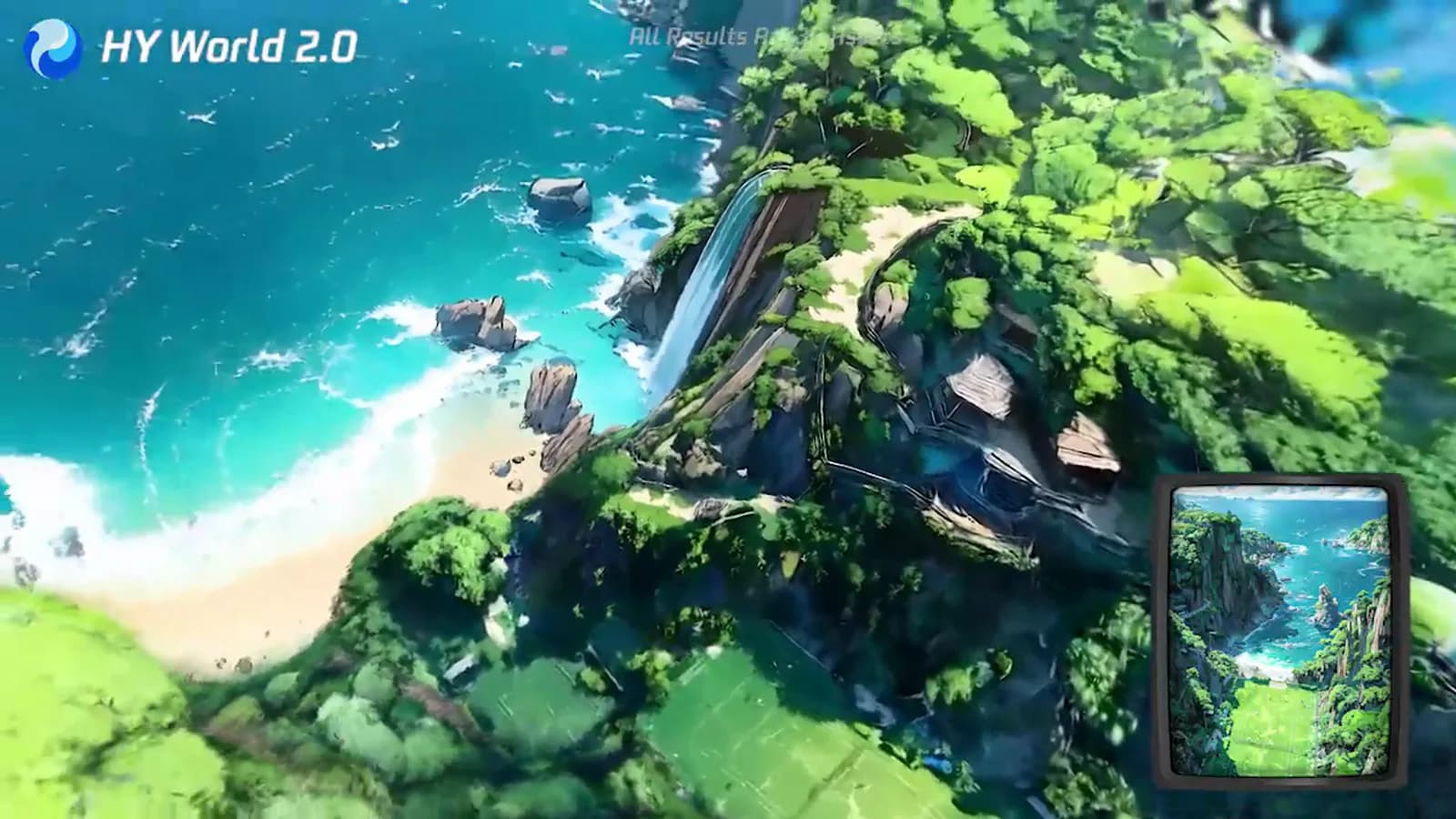 View demo
01 / Overview
World generation, video-to-3D reconstruction, editable meshes, Gaussian splats, persistent assets.
Reconstructs, generates, simulates persistent 3D worlds from text, images, video.
HY-World 2.0 matters here because it clarifies a specific lane: World generation, video-to-3D reconstruction, editable meshes, Gaussian splats, persistent assets.
This is a source-backed orientation profile, not a benchmark verdict.
02 / Strengths
Where it stands out
- Primary-source Tencent anchor beside Alibaba, Ant, World Labs, DeepMind.
- Unusually clear framing: persistent editable 3D assets versus video rollouts.
- May 2026 added HY-Pano 2.0 code and WorldStereo 2.0 weights.
03 / Boundaries
What not to overclaim
- Repo-led research workflow, not a public creator product like Marble.
- Evidence centers on 3D world generation, reconstruction, not generic video.
Generated/reconstructed 3D worlds, not AI video or consumer world simulator.
04 / Access & output
How the model reaches people
Code, cards, weights public; compute, usage constraints follow repository licenses.
- Platforms
- GitHub · Hugging Face · arXiv · Tencent Hunyuan 3D surface
- Outputs
- Generated 3D worlds · Reconstructed 3D worlds · Meshes · Gaussian splats · Point clouds
- Inputs & compatibility
- Unity · Unreal Engine · NVIDIA Isaac-style simulation workflows · Developer-run 3D reconstruction pipelines
05 / Practical path
How to evaluate it
- 01
Check GitHub repo and model card before assuming hosted behavior.
- 02
Choose whether the task is reconstruction, generation, or simulation support.
- 03
Validate output quality in target pipeline before calling it engine-ready.
Primary evidence