Physical AI · Official open-source release

Robbyant releases LingBot-VLA for embodied-AI control

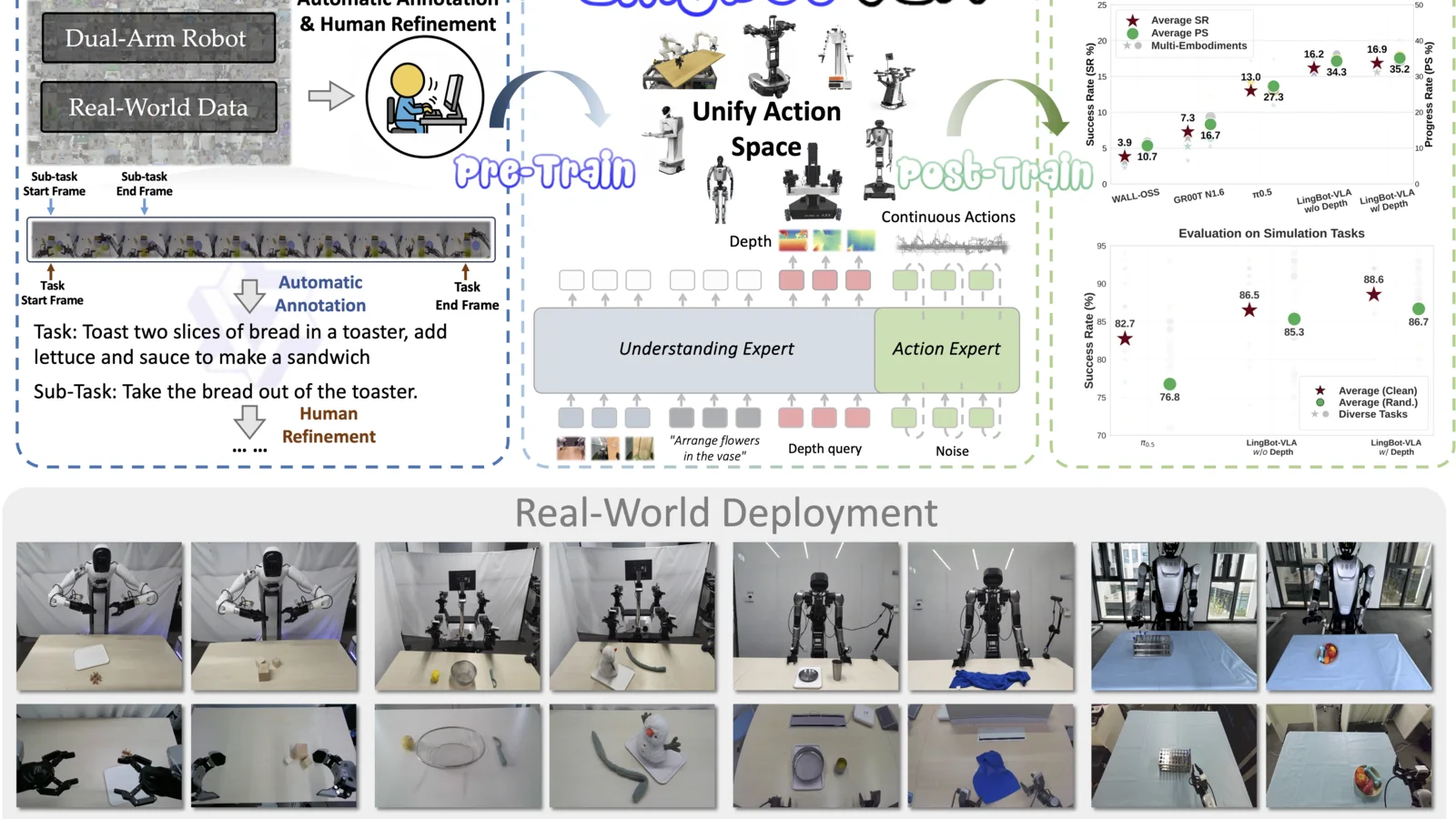
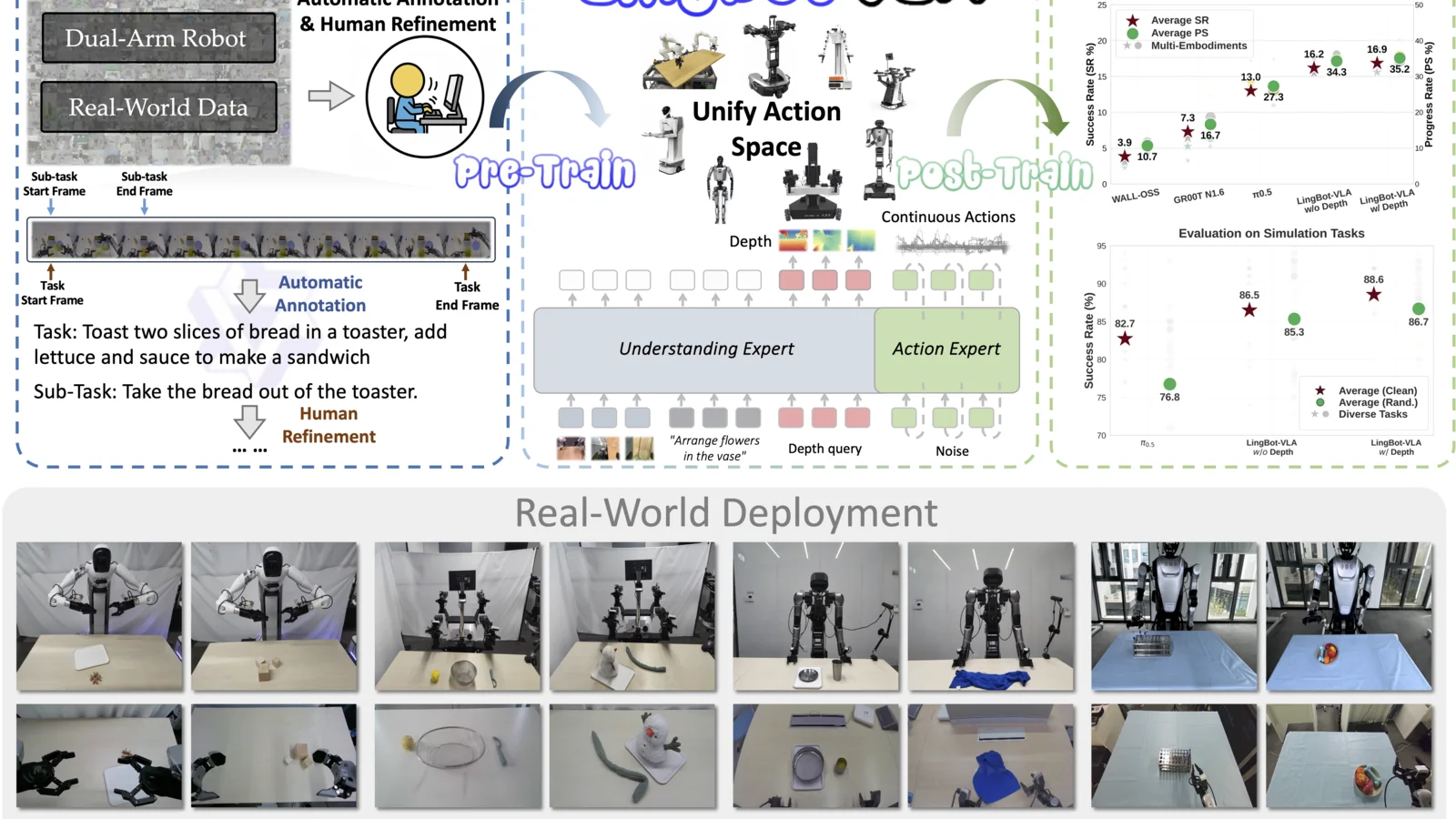
Robbyant released LingBot-VLA as a vision-language-action foundation model for generalist robot manipulation, with public code, paper, and model checkpoints.

2026-01-27Ant Group / RobbyantMedium
Robbyant releases LingBot-VLA for embodied-AI control visual previewPhysical AI

What changed

Robbyant published LingBot-VLA as an open vision-language-action release, giving the site a robot-policy signal separate from explorable world simulators.

Context summary

Robbyant released LingBot-VLA as a vision-language-action foundation model for generalist robot manipulation, with public code, paper, and model checkpoints.

Why visitors should care

This fills an important gap in the site's Ant coverage: not every embodied-AI system in the stack is best described as a world simulator. LingBot-VLA gives the site a clean primary-source anchor for policy and action models that sit next to LingBot-VA and LingBot-World without collapsing them into the same product class.

Editorial analysis

LingBot-VLA matters now because the world-model discussion is moving beyond visual generation into systems that connect perception, language, and action. The release gives readers a way to track Ant and Robbyant's embodied-AI lane without confusing it with the more visual LingBot-World simulator or consumer-facing world creation products.

For robotics readers, LingBot-VLA is useful as a public reference point for action policy work. For creators, it is mostly context: it explains why the same world-model category can include robot-control systems that are not meant to generate explorable scenes for artists or game designers.
Physical AIRoboticsAnt GroupResearch

Scene explainer

Three beats, then the receipts.

The release signal stays short, then sends readers into stable context or official sources.

Physical AI Signal visual01

Signal

Physical AI

Robbyant published LingBot-VLA as an open vision-language-action release, giving the site a robot-policy signal separate from explorable world simulators.

Official open-source release Confidence visual02

Confidence

Official open-source release

Treat this as an embodied-AI control release with public code and model materials, not as a consumer world-building product.

Open stable context Next click visual03

Next click

Open stable context

Open the LingBot-VLA profile for stable status, availability, and source boundaries.

LingBot-VLA

What to verify next

Verify the GitHub repository, paper, and Hugging Face collection before making claims about supported tasks, checkpoints, or evaluation coverage. If the repository adds new demos or benchmark scripts later, the model dossier should be updated instead of treating this short signal as the final status page.

Limits before overclaiming

The release should not be described as a ready consumer product, a general world generator, or proof that embodied agents have solved long-horizon autonomy. The public value is the source-backed control-model lane, not a broad product claim.

Do not collapse LingBot-VLA into the same product class as HappyOyster, Marble, or Genie.

How to use this signal

Read this update as a change to LingBot-VLA, not as a standalone verdict on the whole market. The stable dossier keeps the slower facts: organization, access, source trail, strengths, and limitations. The release signal records the narrower event and points readers toward the page that should remain useful after the news cycle moves on.

If the update affects a comparison path such as LingBot-VLA vs LingBot-VA, use that guide for the practical decision. The source list below is kept on the page so readers can verify the claim directly, check whether access has changed, and avoid repeating a stronger capability statement than the cited material supports.

Related context

Follow this signal into stable pages.

Sources

FAQ

Before you comment

A compact guide to source confidence, category boundaries, and reader participation before adding a note.

Definition

What does World Models Watch count as a world model?

The site tracks systems that model environments, actions, spatial structure, or persistent simulated state. Pure text chatbots and ordinary video generators are only included when they provide a clear bridge toward interactive or physical world modeling.

Category boundary

Why do some AI video systems appear on a world-model site?

Video models are included only when they help explain the path from generated clips to controllable spaces, physics-aware prediction, or agent-ready simulation. The site keeps that distinction explicit so video generation is not overstated as a finished world simulator.

Editorial policy

How does the site decide whether a release is reliable enough to list?

Primary sources carry the most weight: official product pages, research posts, papers, documentation, code repositories, and company announcements. Secondary media can be referenced, but it stays labeled as reported or adjacent unless independently confirmed.

Community

What should readers post in comments?

Useful comments add source links, corrections, release-status notes, comparison questions, or concrete reader context. Comments are public immediately, so readers should avoid private information and unsupported promotional claims.

Read the full FAQ

Discussion

Reader discussion

Add source-backed corrections, questions, or notes for this page.

Loading comments
Loading discussion...

Loading comments...