
3D world
Try nowMarble
World Labs / Marble
Create persistent 3D worlds from prompts, images, or video.
Use caseCreate / Explore / Build
Best for3D concept worlds, spatial storyboards, exportable scene assets
3D world creation
Describe a place and turn it into an explorable 3D world with text-capable generation models.
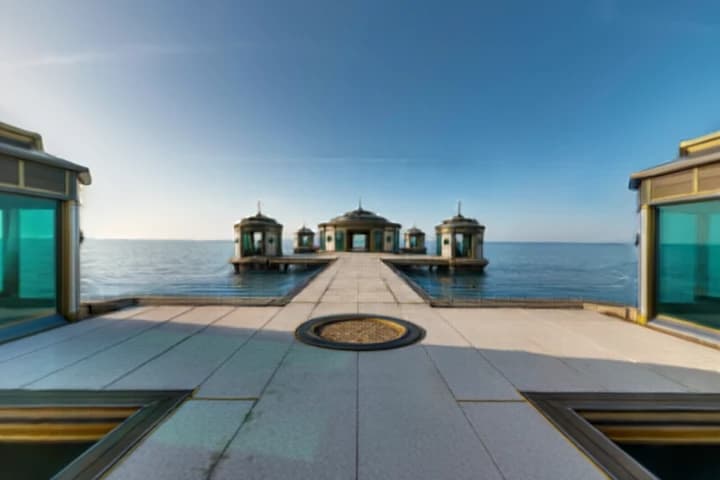 Loading interactive splat…
Relevant tools
These cards keep output type, access, and action visible before the source-backed sections.
Create persistent 3D worlds from prompts, images, or video.
Tencent's open 3D world generation and reconstruction for persistent scene assets and engine-oriented workflows.
| Reader intent | Open next | Boundary |
|---|---|---|
| Fast creator workflow | Marble | Product-led; verify current account, quota, and docs details. |
| Open technical workflow | HY-World 2.0 | Repo-led; not a simple public creator app. |
| Developer API direction | World API | Platform signal; verify API availability before claiming production access. |
Product route
World Labs positions Marble around persistent 3D world creation from text, images, video, and spatial inputs, with export-oriented documentation for downstream workflows.
That makes Marble the better first page for readers searching text-to-3D world generator rather than only 360 panorama generation.
Open route
Tencent Hunyuan's HY-World 2.0 belongs in the same long-tail cluster because it exposes a repo, model card, paper, and generation/reconstruction workflow rather than only a product landing page.
That makes it useful for readers who need to inspect how a world-generation stack is represented in code and weights. It is less useful for a creator who simply wants to open a browser product and produce a finished environment without setup work.
Practical example
A concept artist searching text-to-3D world generator may want a quick way to turn a prompt, image, or short clip into an explorable scene that can be reviewed visually. Marble is the better first stop because it frames generated worlds through a product workflow and documentation.
A technical artist or research engineer may ask a different question: what can be reproduced, exported, benchmarked, or modified? HY-World 2.0 is the better starting point there because public repositories, weights, and papers matter more than a polished product surface.
Evaluation workflow
After a generated 3D world looks good in a demo, the practical checks are geometry quality, scale consistency, camera navigation, material behavior, export format, downstream editor support, and whether the current account tier allows the intended use.
Text-to-3D world generation is not one uniform category. Some systems generate scenes for visual exploration, some reconstruct from observations, and some expose developer APIs. The right choice depends on the next workflow step.
Use the creator workflow when the goal is a finished environment, the open technical stack when reproducibility matters, and the developer API when generation must become part of another product.