All guides

Image to 3D model: one picture, a downloadable asset.

Use the image-to-3D model workflow when you need a GLB-style asset from one image, not an explorable world. Compare Tripo, Meshy, Rodin, and Hunyuan3D by output job.

Image to 3D model: one picture, a downloadable asset. guide cover

Takeaways

  • This workflow produces a downloadable 3D asset, usually GLB, from one image.
  • It is not Marble and not a 360 skybox. Do not plan a navigable world from an object mesh.
  • Choose a model by the asset job: speed, materials, quad mesh, or Hunyuan-family output. Then check current credits and account requirements.

Output formats

Choose the file your next tool can use.

File extensions do not guarantee identical contents. Check whether the result is a mesh, a Gaussian-splat scene, or a provider-specific package before importing it.
GLB

GLB

GLB is the single-file binary form of glTF. It can package scene structure, meshes, materials, textures, skins, and animation in one portable asset, although a GLB is still allowed to reference external resources. Check the generated file in your target viewer because material and extension support varies by application.

Best for
Browser previews, product assets, real-time engines, and general delivery.
Open with
Preview it in World Models Watch or a glTF viewer. To edit it, use Blender's glTF 2.0 importer. Unity uses a glTF importer such as Unity glTFast, while Unreal Engine can import glTF and GLB assets.
How to use
Download the file and import it into the receiving app instead of renaming the extension. For a website, load it with a compatible glTF runtime such as <model-viewer>. For a game project, test one asset in the target renderer before producing a larger set.
Check first
Compare materials, texture color, scale, pivot, animation, and transparency with the browser preview. A required glTF extension may not be supported by every viewer or engine.
USDZ

USDZ

USDZ packages a USD scene and its resources for portable delivery. It is especially useful for Apple Quick Look and AR workflows, but material and animation support can differ from GLB, so verify the generated asset on the target device.

Best for
Apple Quick Look, iOS AR previews, and USD-based workflows.
Open with
Open it with Apple Quick Look or a compatible USD application on a supported Apple device. Reality Composer Pro and other USD-aware creation tools can be used when the asset needs more than a quick preview.
How to use
Download the USDZ and open it on the actual iPhone or iPad that will be used for the experience. Use Quick Look for a 3D or AR preview; use a USD-aware editor or converter when the destination is a DCC tool or game engine.
Check first
Test materials, animation, real-world scale, placement, and interaction on the target device. Features that worked in GLB or another source format may not survive conversion unchanged.
FBX

FBX

FBX is common in Maya, Blender, 3ds Max, Unity, and Unreal pipelines. It can carry geometry, materials, skeletons, and animation, but implementations vary and textures may be delivered separately, so inspect imports before production use.

Best for
Rigged characters, animation handoff, game engines, and DCC editing.
Open with
Import it into Blender, Maya, 3ds Max, Unity, or Unreal Engine. In Blender, use File > Import > FBX; in a game engine, add it through the project's asset or content browser.
How to use
Choose FBX when rigs, bones, or animation clips need to move through an established DCC or engine pipeline. Keep any separately downloaded textures with the file and reconnect them if the receiving app does not do so automatically.
Check first
Verify scale, forward and up axes, pivot, normals, material slots, skeleton orientation, animation takes, and texture paths. FBX importer behavior varies by application and file version.
OBJ

OBJ

OBJ stores polygon geometry and usually relies on a companion MTL file plus external textures. It does not preserve modern scene features such as skeletons or animation, but remains useful when a tool needs a straightforward editable mesh.

Best for
Static mesh editing, conversion tools, CAD-adjacent workflows, and compatibility.
Open with
Import it into Blender, Maya, 3ds Max, or a compatible engine or CAD-adjacent tool. In Blender, use File > Import > Wavefront (.obj).
How to use
Keep the OBJ, its MTL file, and all referenced textures together in the same relative folder structure. Use it as a static editable mesh or as an intermediate format for conversion and cleanup.
Check first
OBJ does not preserve rigs, animation, cameras, or a complete scene hierarchy. Check scale, forward and up axes, normals, smoothing, UVs, and whether the MTL and texture paths were found.
STL

STL

STL stores a triangulated surface without textures, materials, animation, or a reliable scene scale. Check that the mesh is watertight and confirm units in your slicer or fabrication tool before printing.

Best for
3D printing, fabrication checks, and geometry-only interchange.
Open with
Open it in a 3D-printing slicer, CAD tool, or Blender. In Blender, use File > Import > STL; in a slicer, import the file and select the intended printer, material, and quality profile.
How to use
Treat STL as geometry that still needs print preparation. Set the intended units and size, repair the mesh, orient the part, add supports where needed, slice it, and inspect the layer preview before sending it to a printer.
Check first
Confirm watertightness, manifold geometry, wall thickness, scale, overhangs, supports, and bed fit. STL does not carry textures, materials, animation, or dependable unit metadata.

When to use it

Use image-to-3D model when the unit of work is an object.

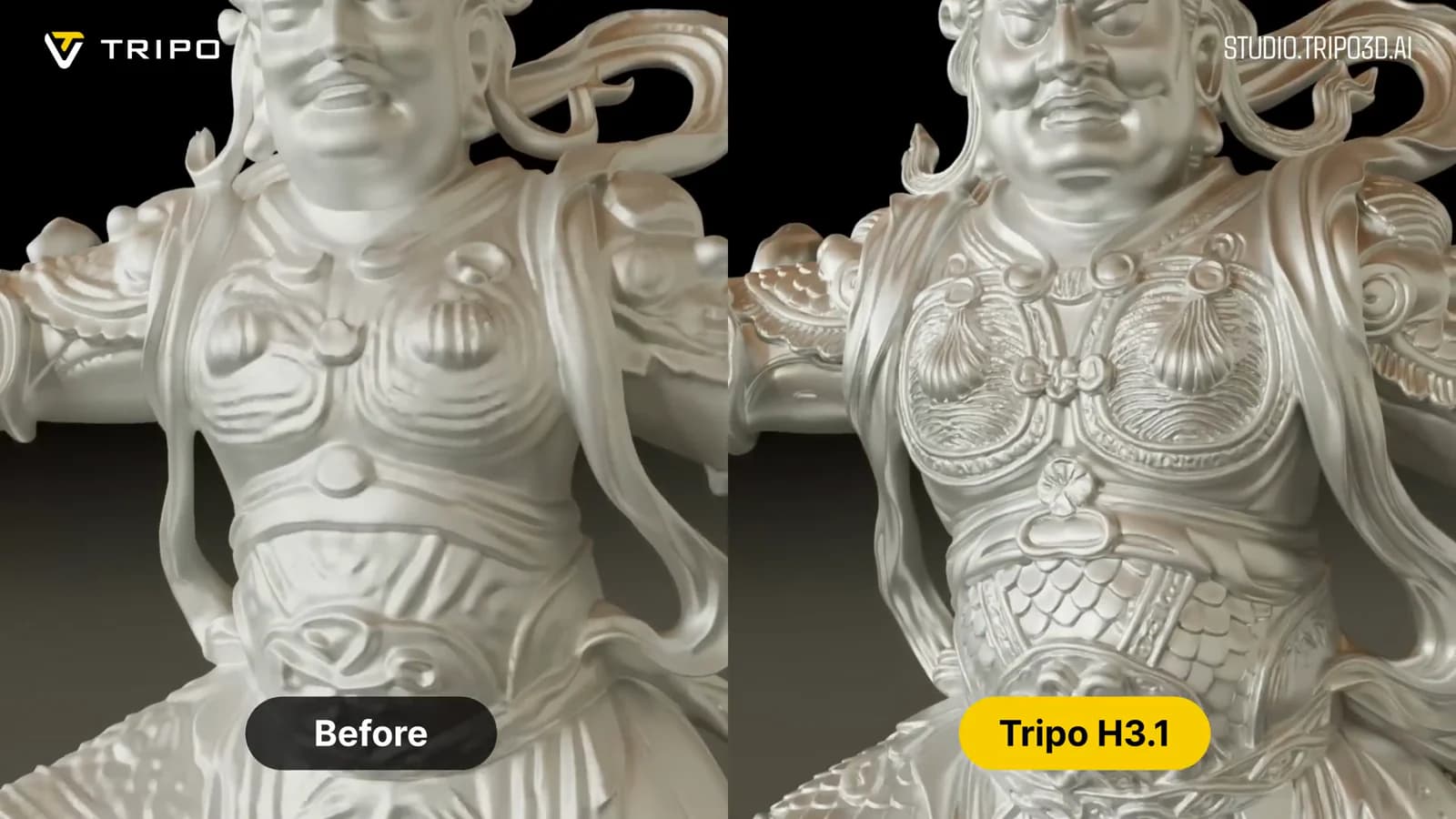
The World Models Watch generator at /image-to-3d-model accepts one image and returns a downloadable 3D model. Current configured routes include Tripo H3.1, Meshy 6, Rodin 2.5, and Hunyuan3D 3.1, with GLB as the common download format.

That is the right tool for props, characters-as-assets, product shots, and engine imports. It is the wrong tool for a place you intend to walk through.

How to run it

Pick the model after you know the asset constraint.

Tripo, Meshy, Rodin, and Hunyuan3D are not interchangeable just because they all accept an image. Rodin is the quad-mesh and PBR path in the current catalog. Meshy and Hunyuan3D are PBR model routes. Tripo is the textured-model route. Credit costs differ by model and should be read from the live editor, not from this page.

Sign-in, credit balance, and short-term file retention apply on the hosted generator. Treat uploads as private working files, not as a permanent asset library.

Quality checks

Inspect the mesh before you call the generation a success.

Look at silhouette, underside, thin parts, texture seams, and scale. A clean GLB can still be unusable if the object is fused to a fake ground plane or if materials break in the target engine.

If the image is a full scene rather than an object, stop. Scene photographs belong in the world workflow or in a skybox workflow, not in an object mesher.

Related stacks

Hunyuan3D is not HY-World, and a GLB is not a world export.

Tencent appears in two different jobs on this site. Hunyuan3D in the generator is an image-to-asset route. HY-World 2.0 is an open world-generation and reconstruction stack. Do not cite one as proof of the other.

If you later need a persistent world rather than an object, open Marble or the image-to-3D world page. If you need a panoramic shell, open Skybox AI.

FAQ

Can I turn a landscape photo into a playable world with this guide?

No. Use the image-to-3D world workflow or a 360 skybox tool. The model generator is for downloadable assets.

Which model is best?

There is no source-backed single winner on this site. Choose by output constraint, then compare the actual GLB in your engine or viewer.

Decision tables

Use a comparison when two lanes are still competing.

Sources

Discussion

Reader discussion

Add source-backed corrections, questions, or notes for this page.

Loading comments
Loading discussion...

Loading comments...